


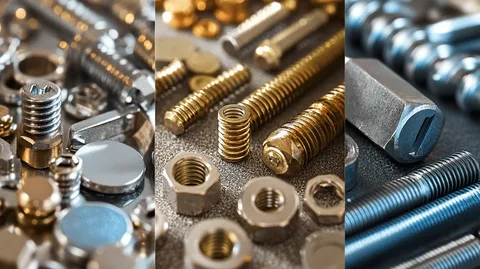
Bolts are one of the most essential fasteners in construction, machinery, and everyday DIY projects. Understanding the different types of bolts, their uses, and how to select the right one can save time, ensure safety, and improve the durability of your projects. This article dives deep into bolts explained: types, uses, and how to choose the right one.
What Are Bolts?
Bolts are mechanical fasteners with external threads designed to be used with nuts or tapped holes. Unlike screws, bolts typically require a nut to secure materials together. They are widely used in construction, automotive, and industrial applications because of their strength and reliability.
Types of Bolts
When exploring bolts explained: types, uses, and how to choose the right one, it’s important to know the common types:
- Hex Bolts
- Most commonly used in construction and machinery.
- Characterized by a hexagonal head and threaded body.
- Carriage Bolts
- Rounded head with a square neck to prevent turning during installation.
- Ideal for wood-to-wood or wood-to-metal fastening.
- Lag Bolts (Lag Screws)
- Heavy-duty bolts used in wood construction.
- Often used for securing beams or posts.
- Anchor Bolts
- Designed to attach structures to concrete.
- Essential in foundations and heavy machinery installation.
- Eye Bolts
- Feature a looped head for lifting and rigging purposes.
- Commonly used in hoisting applications.
Uses of Bolts
Bolts serve a wide variety of functions depending on their type:
- Construction: Connecting steel beams, wooden structures, and concrete fixtures.
- Automotive: Securing engine parts, chassis, and body components.
- Industrial Machinery: Holding heavy machinery parts and equipment in place.
- DIY Projects: From furniture assembly to home repairs.
How to Choose the Right Bolt
Choosing the correct bolt is critical for safety and performance. Here’s how to make the right selection:
- Material
- Steel, stainless steel, and brass are common options.
- Stainless steel is corrosion-resistant, making it ideal for outdoor or humid environments.
- Size and Thread
- Ensure the bolt diameter and length match your project’s requirements.
- Thread type (coarse or fine) affects strength and ease of installation.
- Strength Rating
- Bolts have grades indicating their tensile strength.
- Higher grades are used in heavy-duty applications.
- Application Environment
- Consider exposure to moisture, chemicals, or high temperatures.
- Choose coatings or materials that resist corrosion or wear.
- Compatibility
- Make sure the bolt fits with the corresponding nut or threaded hole.
Understanding these factors ensures that your fastening solution is secure and long-lasting.
Conclusion
Bolts explained: types, uses, and how to choose the right one highlight the importance of selecting the correct bolt for your project. From construction to automotive and DIY projects, bolts play a crucial role in providing structural integrity. By knowing the types, uses, and selection criteria, you can ensure safety, durability, and efficiency in all your fastening needs.
