


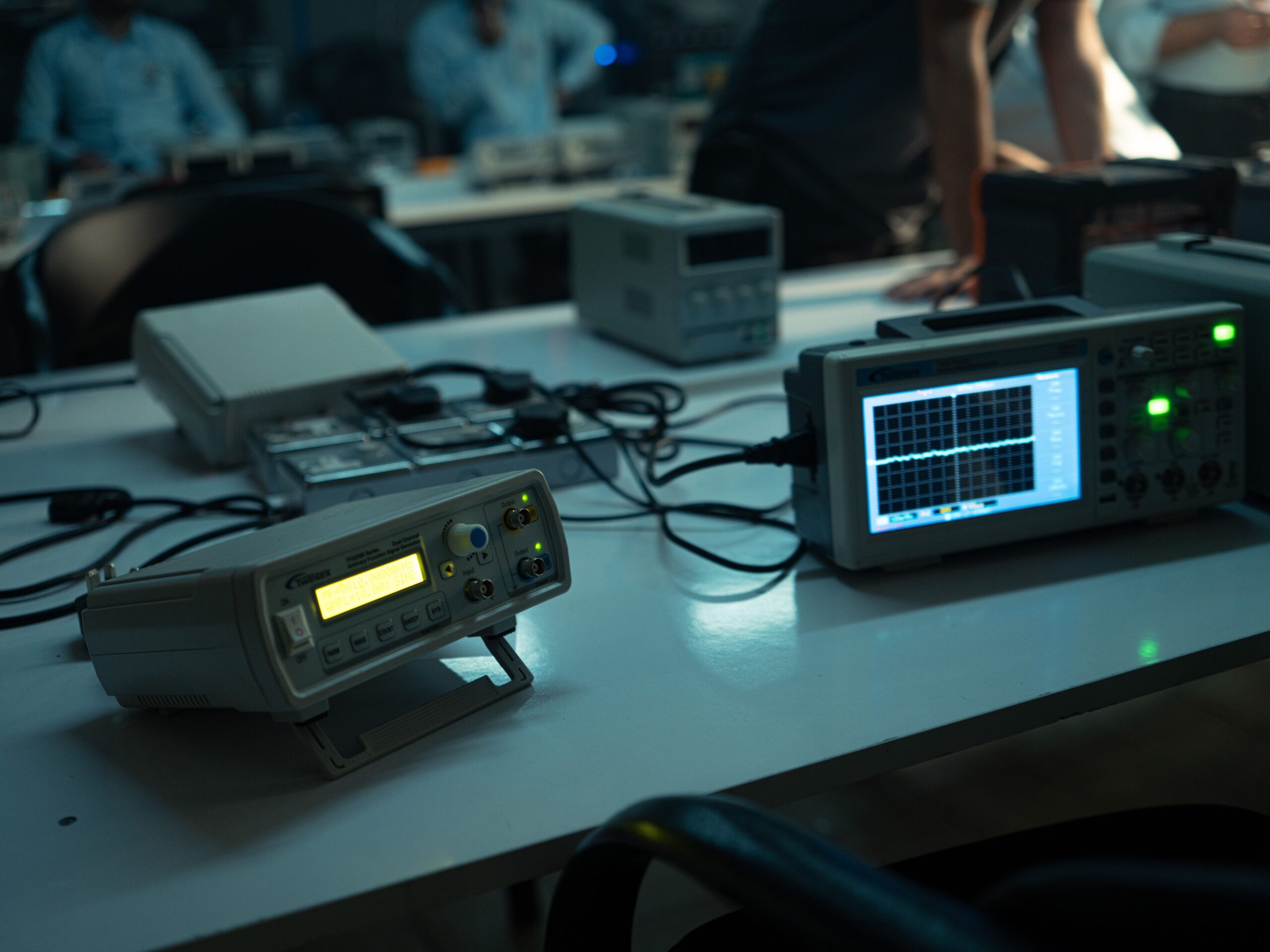
Reliable antenna testing is essential when developing systems that operate at mmWave and sub-THz frequencies. Simulation provides valuable insight during the design stage, but measured performance is needed to determine how an antenna behaves under real operating conditions. The right testing equipment provides accurate measurements and gives engineers greater confidence when validating prototypes and refining designs.
When evaluating antenna testing equipment, it is worth looking beyond basic measurement capabilities. Frequency coverage, measurement accuracy, test configuration, automation, and calibration features all influence the quality of the results.
In this blog post, we’ll explore key features to look for in antenna testing equipment. Read on!
Prioritize Suitable Frequency Coverage
The equipment should support the frequency range required by the antenna under evaluation. Traditional RF applications might operate across relatively established bands, whereas newer radar, communications, imaging, and sensing applications increasingly extend into mmWave and sub-THz ranges.
Check the instrument’s operating range alongside the frequencies used by the antenna. A system with sufficient bandwidth provides greater flexibility for testing current designs and accommodating future projects. Frequency extension modules also deserve attention when measurements above conventional microwave ranges are required.
Evaluate Measurement Accuracy
Accurate measurements sit at the heart of meaningful antenna characterization. Even small measurement errors become significant when engineers are examining parameters such as gain, radiation patterns, beamwidth, polarization, or impedance.
Look for equipment with strong amplitude and phase accuracy, low measurement uncertainty, and stable performance across the intended frequency range. The quality of the receiver, signal source, positioning hardware, and associated components also affects the final measurement. Specifications should therefore be considered as part of the complete test system rather than viewed in isolation.
Examine Calibration Capabilities
Calibration establishes a reliable reference point before measurements begin. At high frequencies, cable losses, connector characteristics, reflections, and other sources of uncertainty require careful consideration.
A suitable system should support calibration procedures appropriate to the measurement method and frequency range. Repeatable calibration workflows also prove valuable when testing multiple prototypes or conducting measurements over extended development cycles. Clear calibration procedures reduce the risk of inconsistent results between test sessions.
Consider Measurement Configuration
Antenna testing takes place in different environments depending on the application. Near-field systems, far-field ranges, compact antenna test ranges, and over-the-air setups each impose different equipment requirements.
Consider how the antenna will be positioned, rotated, connected, and measured throughout the test. Positioning accuracy becomes particularly important for directional antennas and phased-array systems, where small angular changes influence measured radiation patterns. Equipment that accommodates the intended test geometry provides a more practical foundation for repeatable characterization.
Assess Automation and Software
Modern antenna measurements often involve substantial amounts of data. Manual operation across numerous frequencies and angular positions becomes inefficient and introduces opportunities for operator error.
Software should provide straightforward control over instruments and positioning equipment, with configurable measurement sequences and automated data collection. Useful analysis features also support visualization and comparison of radiation patterns, gain measurements, and other antenna characteristics. Compatibility with existing engineering workflows is another important consideration, particularly for teams moving between simulation and physical validation.
Check System Stability
Stable equipment is particularly important for measurements performed across long frequency sweeps or extended test sequences. Changes in temperature, signal level, positioning, or instrument behavior may introduce variations that have nothing to do with the antenna itself.
Look for equipment designed for consistent operation under the conditions expected in the laboratory. Repeatability between measurements provides greater confidence when comparing prototypes, evaluating design modifications, or investigating unexpected results.
Match Equipment to Future Needs
The best testing setup should address more than the immediate prototype. Antenna development frequently evolves toward wider bandwidths, higher frequencies, more complex arrays, and increasingly demanding measurement requirements.
Consider the upgrade path before purchasing a system. Modular hardware, expandable frequency coverage, compatible accessories, and adaptable software provide greater long-term value. This approach also lessens the likelihood of replacing major components when testing requirements become more advanced.
Choosing the right antenna testing equipment is an important step toward obtaining dependable measurement results, particularly as designs move into demanding millimeter-wave applications. The right setup should suit the required frequency range, measurement environment, and level of accuracy without overlooking calibration and system stability.
When testing requirements become more complex, working with experienced professionals provides added confidence. If you need reliable millimeter-wave antenna testing, consider reaching out to the experts, such as those from MilliBox, who understand the challenges involved in high-frequency measurements. Their experience and specialized equipment provide valuable support throughout the testing process, helping you obtain meaningful data and make informed decisions about your antenna design.
