


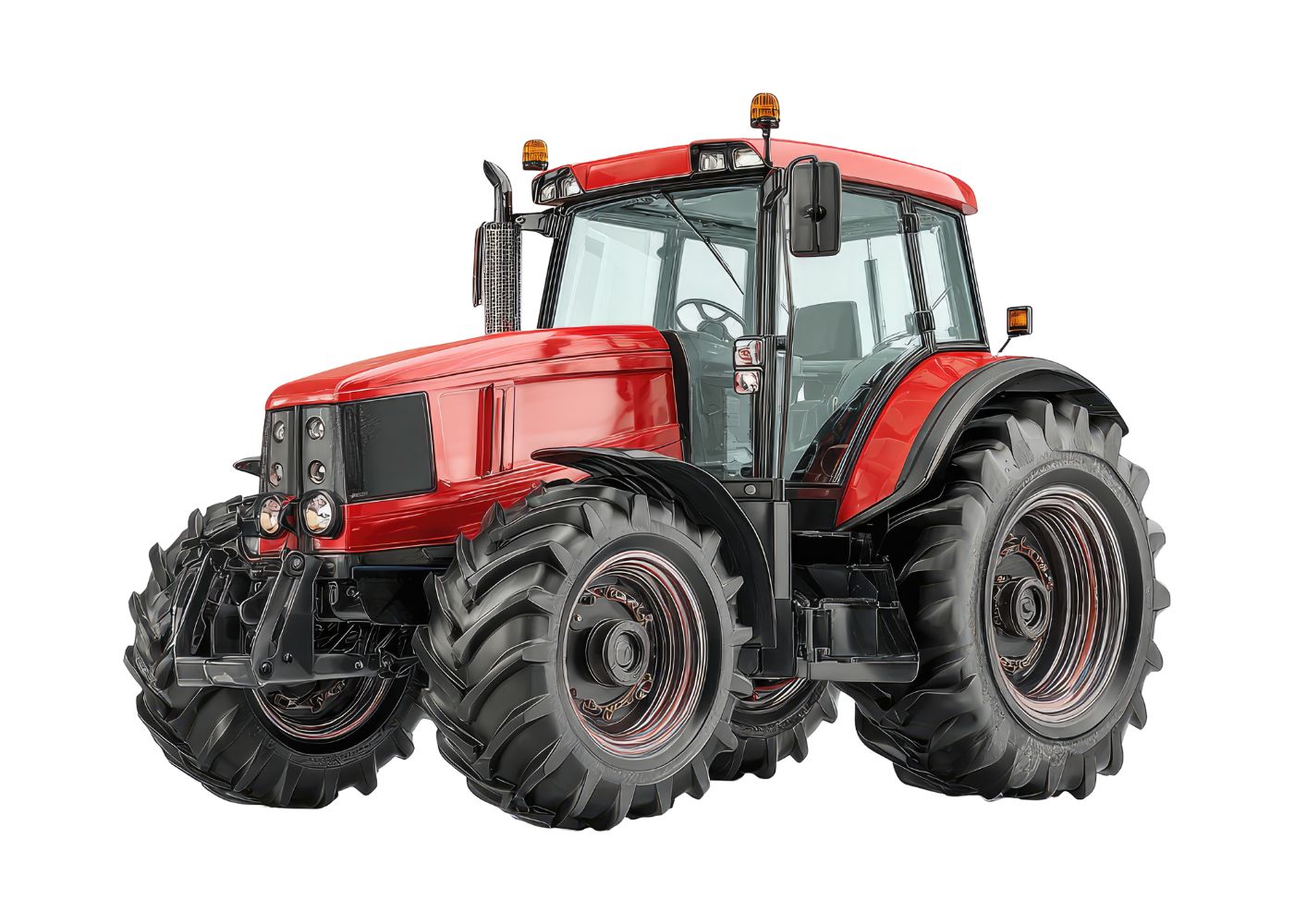
There is a particular kind of frustration that comes with owning more land than you can keep up with. The brush line creeps in a little further every summer. The driveway washboards after every hard rain. The woodpile never quite gets ahead of winter.
A tractor changes that arithmetic. Work that used to consume entire weekends starts fitting into a morning, which is a genuinely satisfying shift for anyone who has spent years fighting a property with hand tools.
Tractor Size Matters More Than Horsepower Alone
The first mistake buyers make is shopping by horsepower. Weight, wheelbase, rear axle rating and hydraulic capacity tell you far more about what a machine will actually accomplish.
Sub-compacts in Kubota’s BX line suit smaller properties where mowing and light loader work make up most of the job. The LX and L series handle heavier loader duty, box blade work, finish mowing and larger rotary cutters. The M series steps into hay ground and acreage where a smaller machine would spend all day doing what a bigger one finishes before lunch.
Loader work is where size shows itself most clearly. A light tractor lifting a full bucket gets tippy, and no amount of engine power fixes that.
Buying slightly too small is the more common regret around here. Buying slightly too big rarely is.
Implements Decide What the Machine Can Do
A tractor with no attachments is an expensive way to drive around your own field. The implements are what turn it into equipment.
The front loader earns its keep first, moving gravel, mulch, snow and anything else too heavy to shovel. After that, most property owners find themselves reaching for a box blade for the driveway, a rotary cutter for brush, pallet forks for awkward loads, and a grapple once they realize how much brush and downed timber a place generates.
Matching matters as much as choosing. Three-point hitch category, PTO horsepower, implement weight and hydraulic flow all have to line up, and a mismatch turns a good tool into a frustrating one.
This is where the dealer earns a place in the decision. Established dealers such as M&R Power Equipment Group, which serves the Hermitage and Butler areas, are worth judging on whether they will let you demo a machine on your own ground, whether parts for your model sit on their shelf rather than three weeks out, whether service happens in-house, and whether they talk you into the right size instead of the largest one on the lot. Renting a similar machine for a weekend before committing is another reasonable way to find out what you actually need.
Safe Operation Takes a Little Learning
Tractors are forgiving machines right up until they are not. Rollovers remain the leading cause of tractor fatalities, and almost all of them are survivable when the rollover protection structure is up and the seat belt is buckled.
Slopes deserve real respect. A raised loader bucket lifts the center of gravity considerably, so carrying loads low is not a preference but a habit worth building early.
The first several hours on a new machine should be slow ones. Learning how the loader behaves when it is loaded, how the machine handles on wet ground, how long it takes to stop on a grade, and how much room a mounted implement needs takes time nobody should rush.
Good Maintenance Keeps the Value In It
Kubota equipment holds its resale value well, and owners who keep up with service are the ones who see that benefit.
The routine is not complicated. Grease points on schedule, engine and hydraulic filters at the recommended intervals, fluid levels checked before work rather than after a problem, and storage out of the weather cover most of it.
Keeping records helps more than people expect. A folder of service receipts turns a used tractor from a gamble into a known quantity whenever it comes time to trade up.
None of this takes much away from the pleasure of the thing. There is real satisfaction in looking back at a cleared fence line, a mowed back field, a smooth driveway or a stacked woodpile and knowing you finished it yourself, before lunch, on a machine that made the work feel possible.
