


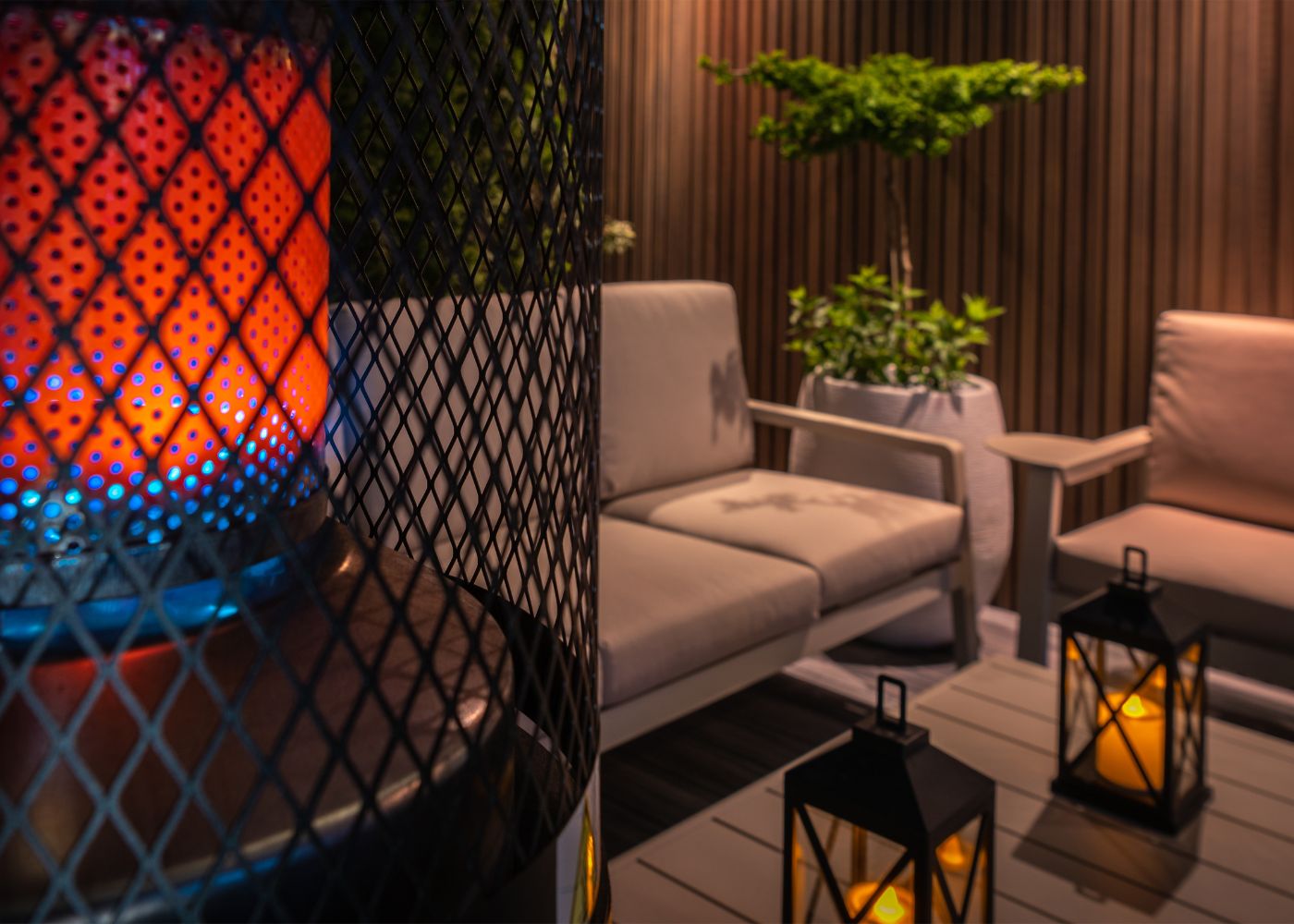
An outdoor kitchen can be the best room in the house. The grill is going, the stone counters are lined with food, music is playing and friends are gathered around the table under an open sky.
Then the sun goes down. The temperature drops, a cool breeze rolls in, guests start reaching for jackets and the party slowly drifts back indoors.
Good heating changes that. With the right setup, your outdoor kitchen can feel as relaxed and inviting as a resort patio, well into the evening and deep into the cooler months.
Placing Heat Where Your Guests Gather
The secret to a comfortable outdoor dining area isn’t just adding heat. It’s putting heat exactly where people sit, stand, chat and linger.
Many homeowners start with a portable propane tower. These heaters can help in a pinch, but they often warm one corner while leaving the rest of the table cold. They also take up floor space, need regular refills, can tip over and often look out of place next to custom stonework.
Built-in infrared heaters work differently. Instead of trying to warm the surrounding air, which a breeze can carry away in seconds, infrared heat warms the people and surfaces it reaches. That makes it far better suited to open-air spaces.
Placement is where comfort is won or lost. Heaters mounted above the dining table, along a covered bar, near the cooking station and over a lounge area can create even warmth without hot spots. Guests stay comfortable whether they’re seated for dinner or standing near the grill.
Blending Smart Controls Into Your Design
A beautiful stone patio deserves equipment that doesn’t steal the spotlight.
Today’s premium heaters come in slim, low-profile designs that can mount flush to a ceiling, attach to a wall, tuck under a pergola beam or recess into a covered structure. Finishes in black, white, stainless steel and other neutral tones help them blend in with the architecture.
Controls can stay out of sight, too. Instead of bulky switches on a stone column, many systems now run through wireless remotes, wall-mounted keypads, smartphone apps or home automation platforms.
Some setups let you divide your space into heating zones. You can warm the dining table while leaving the cooking area cooler, then dim the heat as the night winds down. That flexibility keeps guests comfortable and helps you avoid wasting energy.
Planning matters most here. Running wiring or gas lines is much easier before the stone goes in than after. If you’re still in the design stage, bring heating into the conversation early.
Choosing Products That Handle the Weather
An outdoor kitchen faces sun, rain, humidity and wind year-round. Equipment that looks great at first can fade, rust, crack or fail if it isn’t built for those conditions.
That’s why the company you work with matters as much as the product itself. Trusted specialists such as PHD Outdoor Comfort, which focuses on outdoor heating for homes across North Carolina and the Southeast, can help you sort through the options and match the right heater to your space. A good provider will look at your layout, ceiling height, wind exposure and fuel source before recommending anything.
Professional guidance helps you avoid common mistakes, like choosing a heater that’s too weak for an open patio or too strong for a low ceiling. It also helps you decide between gas and electric models based on what’s already available at your home.
When you compare products, ask about materials, wind ratings, warranty coverage and how well each unit holds up in your local climate. Stainless steel and marine-grade finishes are worth considering if you live near the coast or in a humid area.
Installation deserves the same care. Licensed electricians or gas professionals should handle the hookups, and the heaters should be mounted at safe distances from walls, ceilings, furniture and anything flammable.
Enjoying the Space Long After Sunset
The best outdoor kitchens aren’t just places to cook. They’re places where people want to stay.
When heat is thoughtfully placed, quietly controlled, well installed and built to last, your patio becomes a true extension of your home. Dinner can stretch into dessert, drinks can linger, conversations can keep going and the backyard can stay open for entertaining long after summer ends.
